


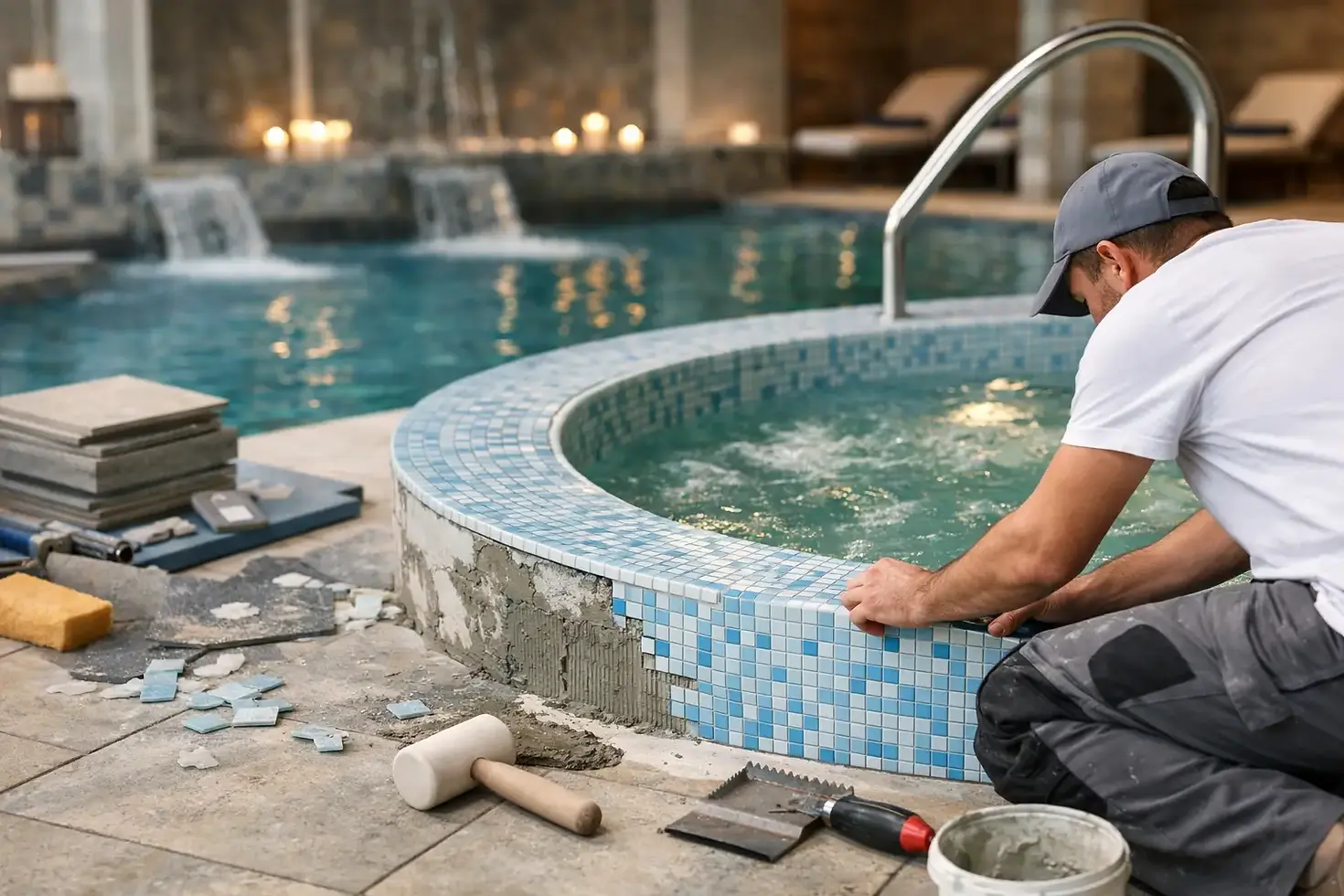
Choosing a Spa Tiling Refurbishment Contractor
A spa can look tired long before it stops functioning. Hollow-sounding floor tiles, stained grout lines, cracked silicone around jets, loose mosaic at steps and persistent damp marks are not simply finish issues. They are early warnings that water may be reaching the wrong layers. Selecting a spa tiling refurbishment contractor is therefore about far more than choosing a new tile. It is about protecting the structure, maintaining hygiene and restoring the standard guests or homeowners expect from a dedicated wellness space.
At Atlas Tiling, we approach spa refurbishment as a technical renewal of a water-exposed assembly. The visible tile finish matters, particularly in a five-star hotel or luxury residence, but it can only perform when drainage, falls, waterproofing, adhesives and movement provision have been considered together.
Why spa tiling fails differently
A spa environment places more pressure on a tiled surface than a typical bathroom. Warm water, humidity, cleaning chemicals, foot traffic and regular thermal movement all work against the installation. In poolside and steam-room settings, that pressure is continuous rather than occasional.
The tile is rarely the root cause on its own. A failed installation may stem from inadequate substrate preparation, insufficient falls to a drain, an unsuitable adhesive, poorly detailed penetrations or movement joints that have been tiled over. In older facilities, previous repairs can also create incompatible layers: a new rigid finish applied over a background that is already moving or retaining moisture.
This is why a cosmetic patch can be false economy. Regrouting an area with loose tiles may improve its appearance briefly, but it does not address water behind the finish. Equally, replacing isolated tiles without checking adhesion and the surrounding waterproofing can leave the underlying fault untouched.
Start with investigation, not tile selection
Before specifying porcelain, glass mosaic or natural stone, a contractor should establish what is beneath the existing finish. This includes assessing the substrate condition, identifying drummy or debonded areas, checking drain performance and reviewing transitions at walls, steps, channels, doors and service penetrations.
The scope may range from localised repairs to a full strip-out. It depends on the age of the spa, the extent of water ingress and whether the existing build-up can accept a new system. A small treatment-room wet area may only require targeted remedial work. A hotel vitality pool surround with widespread failure often justifies removing the finish back to a sound base and rebuilding it properly.
This early assessment should also consider access and operation. For a live hotel or leisure facility, programmes must be planned around closures, guest circulation, noise restrictions and curing times. A contractor who understands refurbishment can sequence the work so that each stage is protected and inspected before the next one conceals it.
Falls and drainage deserve close attention
Standing water is one of the clearest signs of a flawed spa floor. It is unpleasant underfoot, creates slip risk and allows cleaning residues to collect. More importantly, it indicates that falls may not be directing water efficiently to the drain.
Correcting this may require new screed rather than a levelling compound alone. The required depth and build-up depend on the existing levels, drainage position and finished floor threshold. On complex areas, the screed must establish deliberate falls while retaining consistent tile lines and avoiding awkward cuts around channel drains.
Drainage details are especially important where a spa floor meets a pool surround, shower zone or exterior threshold. The visible stainless-steel channel is only one component. The waterproofing connection beneath it must be secure, continuous and compatible with the specified membrane.
What a capable spa tiling refurbishment contractor should control
A specialist contractor should take responsibility for the complete tiled assembly, not merely the final fixing stage. That means understanding how each layer affects the one above it.
The key areas are substrate preparation, screeding and falls, waterproofing, tile and adhesive selection, movement joints, grout or resin finishes, and precise sealing at interfaces. In a refurbishment, the contractor must also manage demolition carefully. Removing existing tile without damaging a viable substrate can reduce disruption, but where the background is compromised, retaining it is not a saving.
Waterproofing should be designed around the room rather than treated as an optional coating. Corners, wall-to-floor junctions, drains, steps, benches and pipe penetrations need purpose-made detailing components. A membrane that stops short of a drain flange or is punctured by later works has limited value, regardless of how attractive the tile looks.
Movement is another issue often overlooked in decorative specifications. Large-format porcelain can create a calm, contemporary spa aesthetic with fewer grout joints, while mosaics follow curved benches, steps and complex falls beautifully. Each material has different practical demands. Large tiles require a particularly flat background and controlled adhesive coverage; mosaics introduce more joints but can accommodate geometry more readily. The right choice depends on the space, the desired finish and the construction beneath it.
Finishes must suit use, not just the visual scheme
A polished tile may suit a dry relaxation room but be inappropriate around a wet pool edge. Slip resistance, cleanability and chemical resistance must be balanced with the design brief. A textured porcelain can provide useful grip, although overly aggressive surfaces may be difficult to maintain or uncomfortable in barefoot areas.
Grout selection is equally consequential. Colour-matched resin finishes can produce crisp, refined lines and offer strong resistance in demanding areas, but they require experienced application and careful cleaning during installation. Cementitious grout may be suitable in some locations, provided the system is correctly specified and maintained. There is no universal best product; there is only the product appropriate to the exposure and maintenance regime.
Refurbishment without compromising the design
The best spa refurbishments make technical decisions feel invisible. Drain falls should not interrupt the rhythm of the tile layout. Movement joints should be planned where they can be integrated discreetly. Mitred edges, neatly formed niches and precisely finished benches can turn practical construction details into part of the design.
This is particularly relevant in premium settings where stone-effect porcelain, oversized formats or carefully matched mosaics are central to the interior concept. A 1.2-metre porcelain tile may create an impressive uninterrupted surface, but it demands accurate setting-out, substrate flatness and safe handling. The format should be chosen because it can be installed correctly in the space, not simply because it appears on a mood board.
At transitions, small details carry disproportionate visual weight. A poorly finished drain edge, uneven tile return or mismatched silicone line can undermine an otherwise high-value scheme. Conversely, clean junctions and disciplined alignment communicate quality immediately, even to guests who cannot identify the technical work behind them.
Questions to ask before appointing a contractor
A serious proposal should explain the intended scope rather than simply quote a square-metre rate. Ask whether the contractor has inspected the substrate and drainage, how waterproofing will connect to drains and penetrations, and what provision will be made for movement joints.
It is also sensible to ask how the tile format affects the programme and whether the selected finish is suitable for the planned cleaning products and level of wet use. For commercial sites, clarify how the work will be phased, protected and handed back. For private homes, discuss dust control, access, ventilation and the time required before the spa can safely return to service.
Experience in technically demanding wet areas is more relevant than a gallery of attractive domestic bathrooms. Pool and spa work requires a contractor who can recognise the difference between a surface defect and a system failure, then recommend a proportionate remedy.
A refurbishment should earn its longevity
A spa is a place designed around comfort, restoration and considered luxury. Its construction must withstand the opposite: water pressure, thermal change, cleaning routines and daily use. When the background is sound, the waterproofing is continuous and the finish is installed with discipline, the result is not merely renewed. It is prepared to perform.
If your spa shows signs of tile failure or water-related deterioration, the most useful first step is a detailed site assessment. It provides the evidence needed to decide whether a targeted repair is credible or whether a full refurbishment will protect the space properly for the years ahead.


Comments